Laboratory balances and scales are crucial instruments for precisely measuring mass in scientific settings. They fall into two main categories based on their accuracy and capacity:
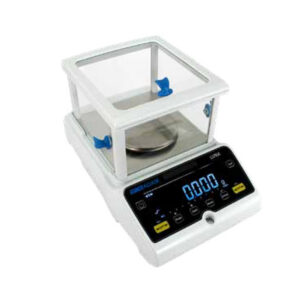
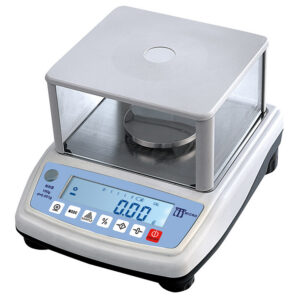
1. Analytical Balances: These offer the highest precision, typically with a readability of 0.1 mg (0.0001 g) or better (four or more decimal places). They are extremely sensitive and require a draft shield (transparent enclosure) to protect the weighing pan from air currents. They are used for tasks demanding maximum accuracy, such as preparing primary chemical standards, and generally have a lower maximum capacity (e.g., up to 300g).
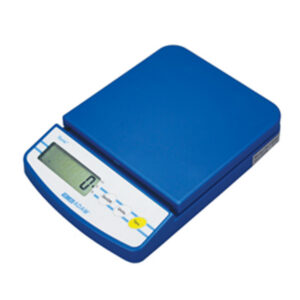
2. Precision Balances (Top-Loading Scales): These are less sensitive, commonly offering 0.01 g or 0.001 g readability. They provide a higher maximum capacity (ranging up to several kilograms) and generally don't require a draft shield. They are used for routine weighing, general sample preparation, and compounding where sub-milligram accuracy isn't essential.
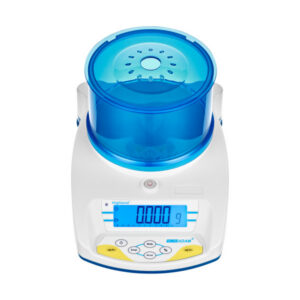
Specialized types, like microbalances (for ultra-high precision) and moisture analyzers (combining weighing with heating), serve specific scientific needs.
Showing all 4 results