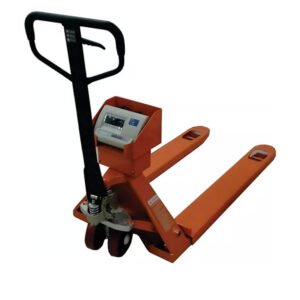
A pallet jack scale is a piece of material handling equipment that combines the mobility of a standard pallet jack with an integrated digital weighing scale.
Its primary function is to allow operators to weigh and transport palletized loads simultaneously, significantly streamlining logistics and warehousing operations by eliminating the need to move loads to a separate floor scale. This integration saves time, reduces labor, and improves workflow efficiency.
The scale mechanism uses four load cells built into the forks, which measure the weight when the pallet is lifted. The reading is displayed on a battery-powered digital indicator, usually mounted on the handle. This display offers crucial functions like tare (for pallet weight deduction) and zeroing.
Commonly used in shipping, inventory control, and manufacturing, pallet jack scales ensure accurate freight costing and assist in checking weights to prevent vehicle overloading. Capacities typically range between 2000kg to 3000 kg.
Showing the single result